FTSE Climbs as Cooling Oil and PMI Highs Boost Miners and Industrials
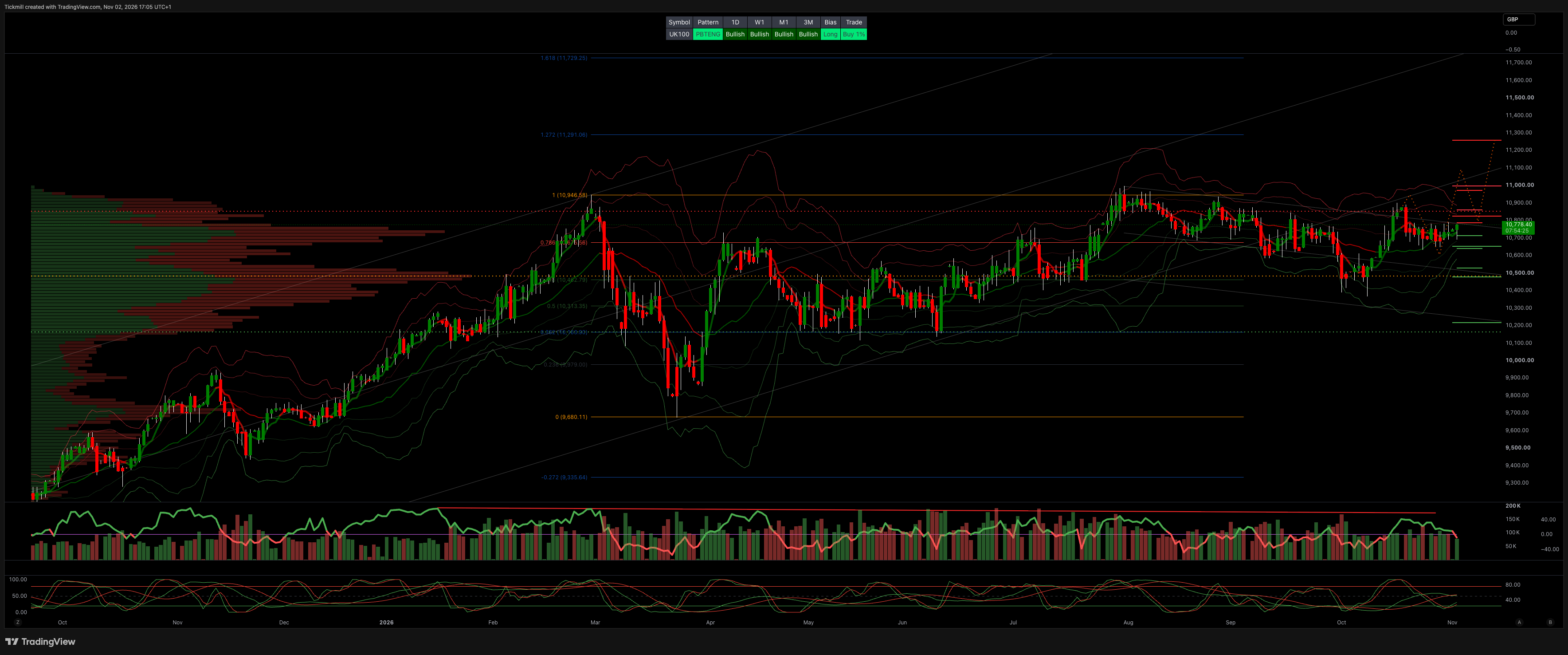
FTSE Climbs as Cooling Oil and PMI Highs Boost Miners and Industrials
London's benchmark FTSE 100 shook off early morning caution to close firmly in positive territory on Monday, advancing 0.32%. While investors maintained a watchful stance ahead of Thursday's Bank of England interest rate decision, sentiment was buoyed by a sharp decline in crude oil prices—following diplomatic talks between Iranian officials and Qatari mediators—and data confirming U.K. manufacturing activity surged to a five-month high.
Mining and cyclical real estate stocks led top-flight gains, drawing support from a broader risk recovery as energy-driven inflationary pressures eased. Industrial miners advanced across the board: Antofagasta climbed 2.3% and Anglo American added 1.8%, while Fresnillo rose 1.7% and Rio Tinto gained 1.1%. Broad-based strength lifted wealth managers, travel, and retail names, with St. James's Place, IAG, Weir Group, Kingfisher, and JD Sports Fashion posting gains between 2.5% and 3.1%. Solid advances of 1.5% to 2.3% were logged across Whitbread, British Land, Land Securities, Barratt Redrow, Imperial Brands, Coca-Cola HBC, Lloyds Banking Group, Howden Joinery, Burberry Group, J Sainsbury, Marks & Spencer, Smiths Group, and Tritax Big Box REIT. Additional upside came from ICG, 3i Group, Tesco, InterContinental Hotels Group, Babcock International, Diageo, and Polar Capital Technology Trust. Outside the blue-chip index, transport operator FirstGroup jumped 4.0% after agreeing to sell five West Yorkshire depots and 330 buses for £109 million while securing two regional franchise contracts valued at approximately £40 million in annual revenue.
In contrast, energy heavyweights and select defensive names capped the day's advance. Plunging crude benchmarks pulled down Ithaca Energy (-2.1%), BP (-1.4%), and Shell (-1.1%). Financial and consumer names also saw selective profit-taking, with Lion Finance shedding 2.1%, while Endeavour Mining, Vodafone Group, HSBC Holdings, Melrose Industries, WPP, and GSK drifted lower between 0.8% and 1.4%.
Geopolitical shifts in energy markets dominated macro developments. Front-month Brent crude futures fell sharply, tumbling over 4.3% to $108.50 a barrel (after dipping to an intraday low of $108.11) amid optimism that talks involving Iranian officials and Qatari intermediaries could alleviate Middle Eastern supply disruptions. Reports indicating U.S. President Donald Trump intends to afford diplomacy more runway before contemplating military action reinforced the pullback in oil prices.
On the domestic economic front, S&P Global's final manufacturing PMI rose to a five-month high of 52.8 in October, matching the flash estimate and up from 51.9 in September. Output and new orders gained traction across domestic and export markets, pushing overall business optimism to an eight-month high despite lingering caution surrounding the high-cost backdrop and the upcoming Bank of England Monetary Policy Committee meeting on November 5.
Markets are bracing for a 25 basis point increase, which would push the Bank Rate up to 4.0%. The latest October Decision Maker Panel (DMP) survey highlights the tricky position the Monetary Policy Committee (MPC) finds itself in: with actual and anticipated price increases hovering around 4%, there's a clear need for policy tightening. However, signs of a cooling job market suggest that the MPC may not need to take an aggressive approach. As a result, the Bank of England is likely to implement what some are calling a "dovish hike"—raising rates to maintain inflation credibility while signalling that the peak rate is approaching. In the meantime, the aftermath of the recent Budget is providing some comfort for UK gilts. Smaller-than-expected financing adjustments from the Debt Management Office (DMO) and the proactive use of the Short-Term Repo (STR) facility have helped shield front-end spreads from the pressures of significant balance-sheet reductions.
Finish Line: U.K. equities began November on a firm footing as a steep drop in crude oil prices and robust manufacturing momentum lifted mining, industrial, and consumer discretionary shares. Although energy majors tracked lower oil prices, the FTSE 100 sustained its recovery into the close, holding above the 10,750 threshold ahead of this week's pivotal BoE rate verdict.
Disclaimer: The material provided is for information purposes only and should not be considered as investment advice. The views, information, or opinions expressed in the text belong solely to the author, and not to the author’s employer, organization, committee or other group or individual or company.
Past performance is not indicative of future results.
High Risk Warning: CFDs are complex instruments and come with a high risk of losing money rapidly due to leverage. 68% and 74% of retail investor accounts lose money when trading CFDs with Tickmill UK Ltd and Tickmill Europe Ltd respectively. You should consider whether you understand how CFDs work and whether you can afford to take the high risk of losing your money.
Futures and Options: Trading futures and options on margin carries a high degree of risk and may result in losses exceeding your initial investment. These products are not suitable for all investors. Ensure you fully understand the risks and take appropriate care to manage your risk.
Patrick has been involved in the financial markets for well over a decade as a self-educated professional trader and money manager. Flitting between the roles of market commentator, analyst and mentor, Patrick has improved the technical skills and psychological stance of literally hundreds of traders – coaching them to become savvy market operators!